 Behavioral Experiment
iPhone and iPad
Behavioral Experiment, the app
The worksheet with guidance built into every step, worked examples to lean on, a step ladder that tracks the climb, reminders, and a summary you can hand to your therapist. Free, no ads, no accounts, and nothing collected.
Requires iOS 17 or later. English and Spanish.
What it does
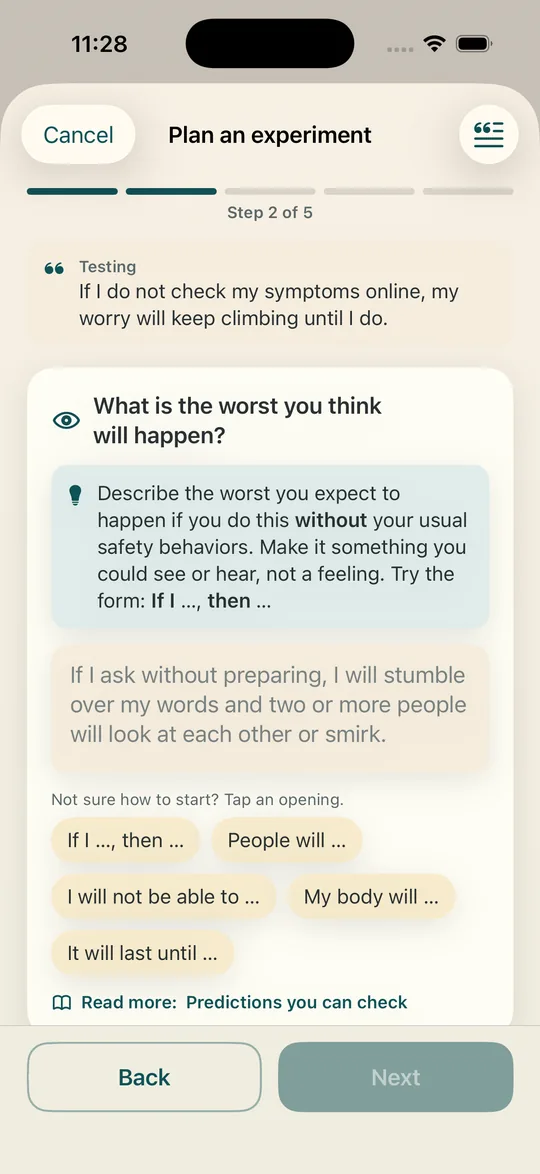
Guides each step. Write the belief, choose a situation, make the prediction observable, name the safety behaviors to drop, and note what could get in the way. Every step has a short explanation and a worked example you can open, or use as a starting point.
Suggests safety behaviors that fit. The suggestions change with what you wrote. A belief about blushing brings up different precautions from one about driving on the highway.
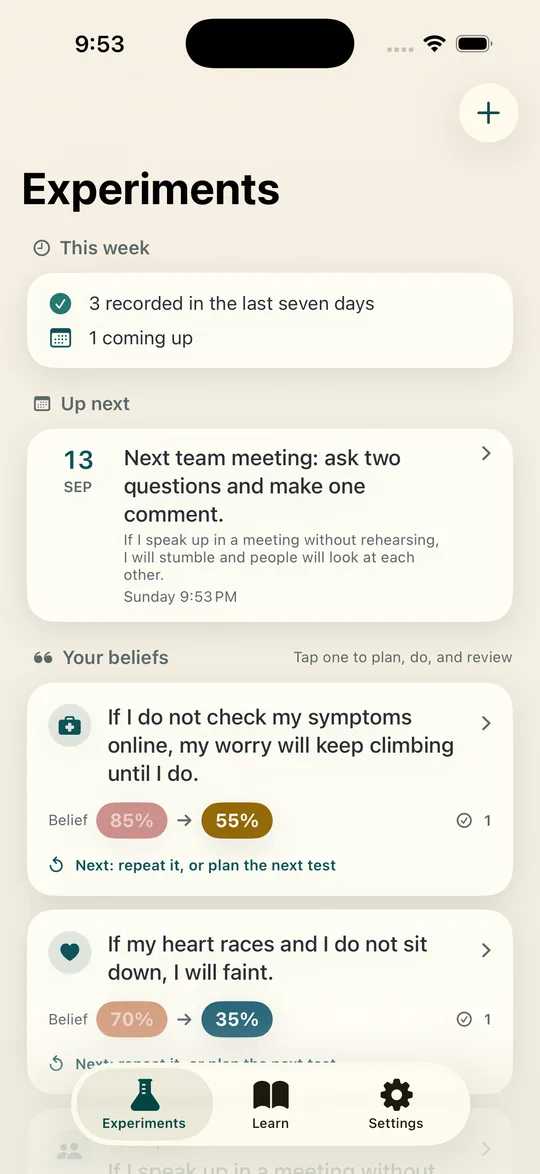
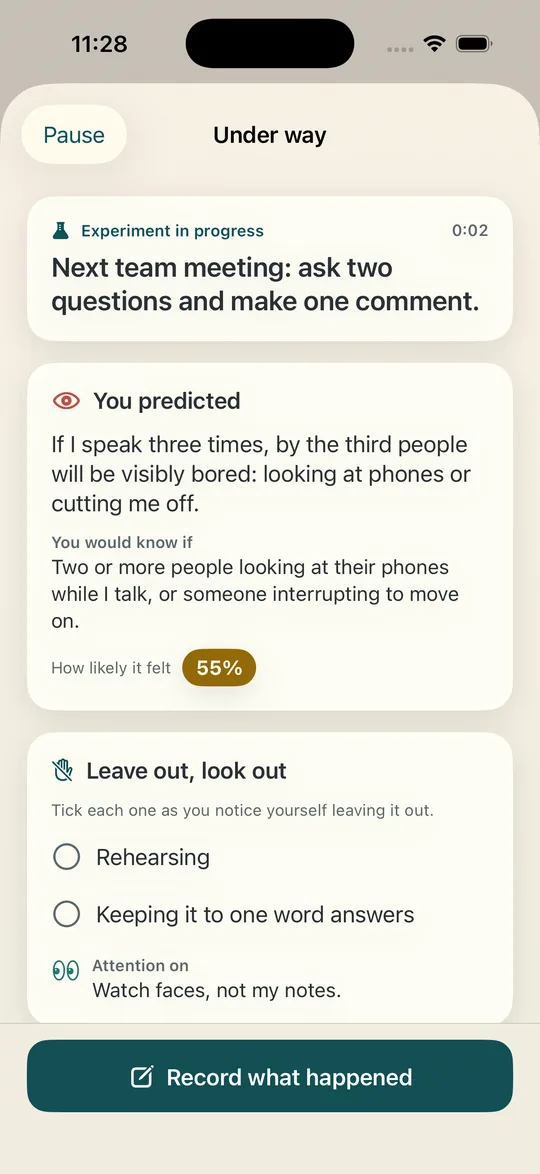
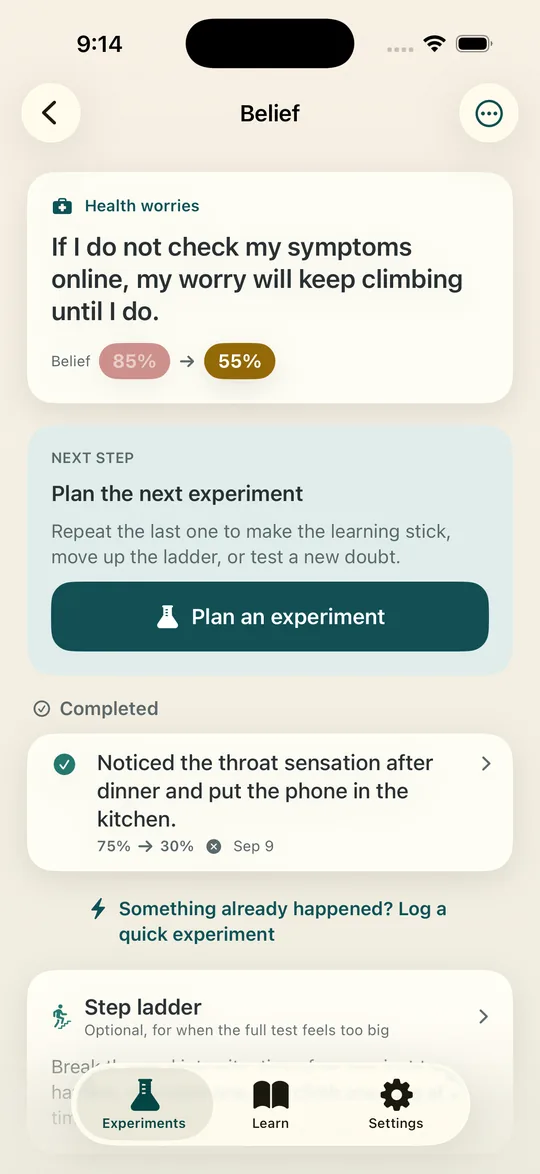
Stays with you during the experiment. A single screen with the plan, the prediction, your safety behaviors as a checklist, distress check-ins, and a place for notes that flow straight into the review.
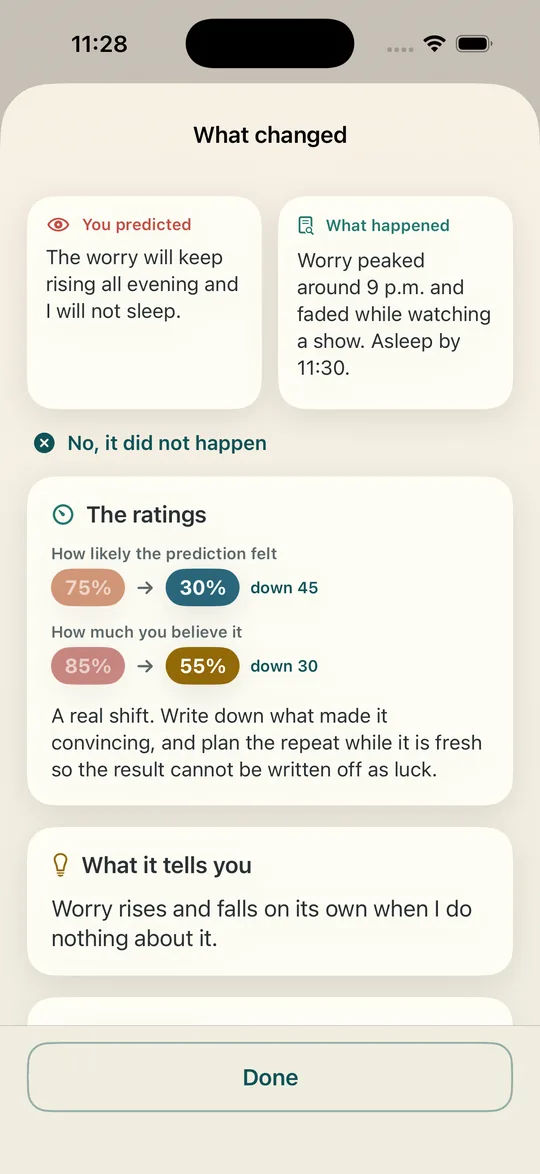
Closes the loop. After you record what happened, the app shows the prediction beside the outcome, both ratings before and after, and offers the next move: repeat it, move up the ladder, or plan a different test.
And around it
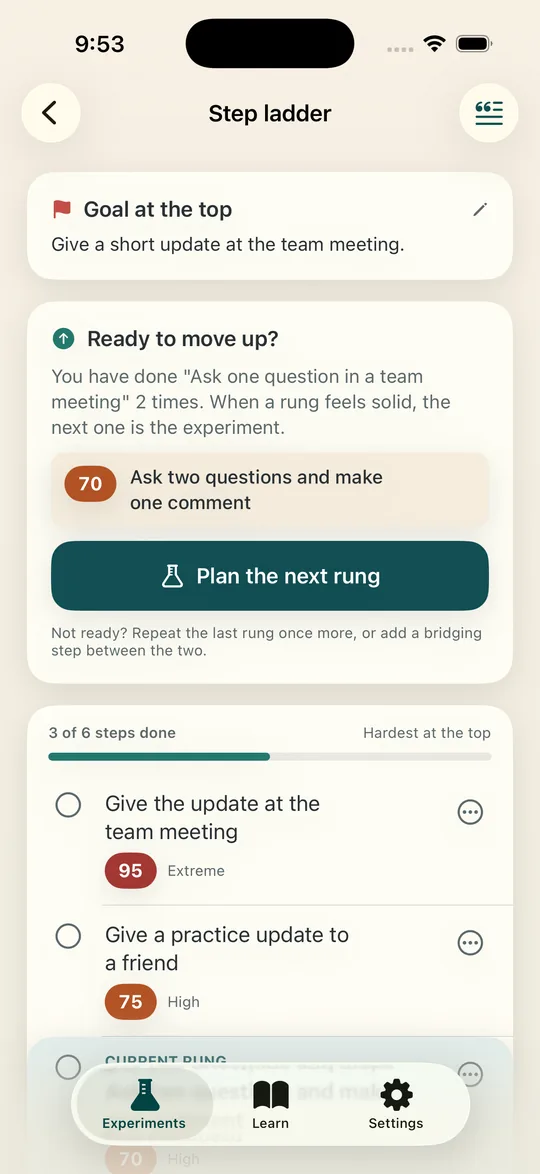
Step ladders. Situations from easiest to hardest, rated for expected distress, with a history under each rung and a nudge to move up once a rung has been done twice.
Reminders. A notification when an experiment is due, a nudge a few hours later to record it, and an optional once a week check-in. All scheduled on your phone.
A session summary for your therapist. One page per belief: the rating over time, the experiments in order, and what each one taught you. Share it as a PDF whenever you choose.
Nine short articles on CBT, anxiety, avoidance, safety behaviors, experiments, predictions, ladders, and working with a therapist, each with its references. The same ones as on this site.
Siri and Shortcuts. "Log a quick experiment," "Plan an experiment," and "Record what happened."
Private by default
There are no accounts and no analytics. Everything you write is stored on your device. If you turn on iCloud sync, it is copied to your own iCloud account so it appears on your other devices; that data moves between your devices and Apple, and we never have access to it. You can lock the app with Face ID or your passcode. There is no server of ours, and nothing you write is ever sent to us. Privacy policy.
Not a treatment
The app is a guided worksheet and a set of educational articles. It is not therapy, counseling, medical care, diagnosis, or treatment, and using it does not create a professional relationship with us. It says this on first launch and asks you to agree to the terms of use before you begin. If you are working with a therapist, psychiatrist, or other clinician, plan experiments with them and follow their guidance over anything in the app. You decide whether to do any experiment, and you do it at your own risk.
Support
Questions, problems, or something that reads wrong in either language: hello@behavioralexperiment.com. The support page answers the common ones.